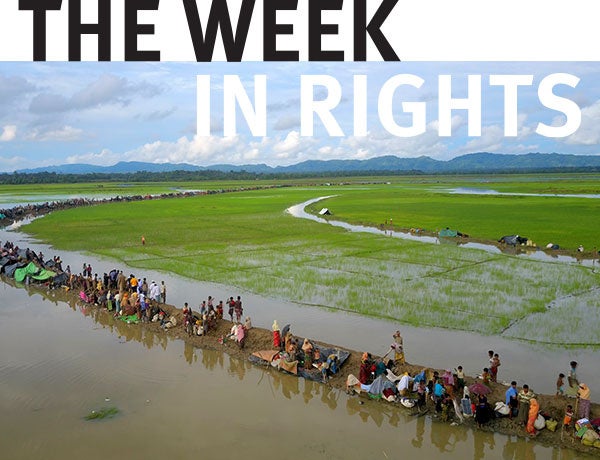
“Today the truth has been recognized”. The International Court of Justice on Thursday found Myanmar responsible for genocide against the Rohingya during operations by Myanmar’s military in 2016 and 2017. The ruling is a historic milestone in the Rohingya peoples' long quest for justice.
The landmark case, brought by Gambia, alleging that Myanmar had violated the Genocide Convention.
“The ruling is long-awaited recognition of the suffering the Rohingya have endured from Myanmar’s military,” said Maria Elena Vignoli, senior international justice counsel at Human Rights Watch. “The ruling also provides a significant precedent for victims of genocide, and other grave crimes, across the world in their own quest for justice.”
In refugee camps in Bangladesh, Rohingya watching on televisions cheered as the judgment was read.
Keep reading below to learn more about the Rohingya’s long road to justice.
Unlawfully displaced. A new tech manufacturing hub in the Philippines is threatening to displace hundreds of Indigenous peoples and farmers.
Part of the United States’ “Pax Silica” initiative, the Philippine government will be providing land for the construction that includes territory inhabited for generations by the Indigenous Aeta tribe.
For those who live on and depend on the land for their livelihoods, the impending deal, which has yet to be signed, spells disaster.
“We do not want to give up our community,” a community Chieftain told us. “How do we give up our burial grounds, our church, our livelihood?”